If your dog or cat’s blood work bill reaches $350, you may wonder whether you are paying for the testing itself or everything surrounding it.
In 2026, a $350 veterinary blood work bill can be reasonable when it includes an exam, CBC, chemistry panel, collection, and clinic overhead. At-home testing may cost less because it bundles the sample collection and laboratory work into one transparent price: while using the same licensed laboratories for accurate diagnostic analysis.
The important distinction is that at-home blood testing does not replace a physical examination when your pet is sick. It offers a convenient, lower-stress way to collect veterinary-quality samples for wellness screening, monitoring, and preventive care.
What does pet blood work cost in 2026?
The cost depends on your pet’s species, location, health status, clinic type, and the number of tests ordered.
Current 2025–2026 veterinary cost data places common testing in these ranges:
- Routine CBC for a dog: approximately $104
- Dog chemistry panel: approximately $164
- Routine veterinary exam: approximately $56–$129
- Routine CBC plus biochemistry testing: commonly $100–$200 for the laboratory portion
- Broader senior, pre-anesthetic, or diagnostic panels: approximately $150–$350 or more
A PetMD guide to blood tests for dogs and cats also reports that routine blood work, including a CBC and biochemistry panel, typically costs about $100–$200.
These figures do not mean every clinic charges the same amount. Emergency hospitals, specialty practices, and high-cost urban areas may charge more. The final invoice can also include an examination fee and additional disease screening.
How can a $350 vet blood work bill break down line by line?
A clinic invoice may not show “markup” as one clearly labeled charge. Instead, the cost is usually distributed across the exam, individual tests, collection, handling, and facility overhead.
Here is an illustrative 2026 example of how a $350 dog blood work bill could be structured:
| Veterinary clinic charge |
Example amount |
| Physical examination |
$82 |
| Complete blood count (CBC) |
$104 |
| Chemistry panel |
$164 |
| Estimated total |
$350 |
The $82 examination fee falls within the current national range reported for routine veterinary visits. The CBC and chemistry amounts reflect the 2025–2026 averages published in CareCredit’s veterinary cost guide.
Your actual invoice may look different. For example, a clinic could:
- Bundle the CBC and chemistry into one panel
- Add a sample collection or handling charge
- Include electrolytes or thyroid testing
- Add heartworm, tick disease, or other screening
- Charge a separate consultation or recheck fee
- Use in-house equipment for faster results
- Send samples to an outside reference laboratory
The word “markup” can sound alarming, but clinic pricing also supports trained staff, equipment, facility costs, medical records, supplies, and immediate veterinary oversight. The best way to understand your bill is to request an itemized estimate before testing.
What do the CBC and chemistry panel actually measure?
Blood work is not one single test. It is a group of measurements that helps your veterinarian evaluate different systems in your pet’s body.
What does a CBC show?
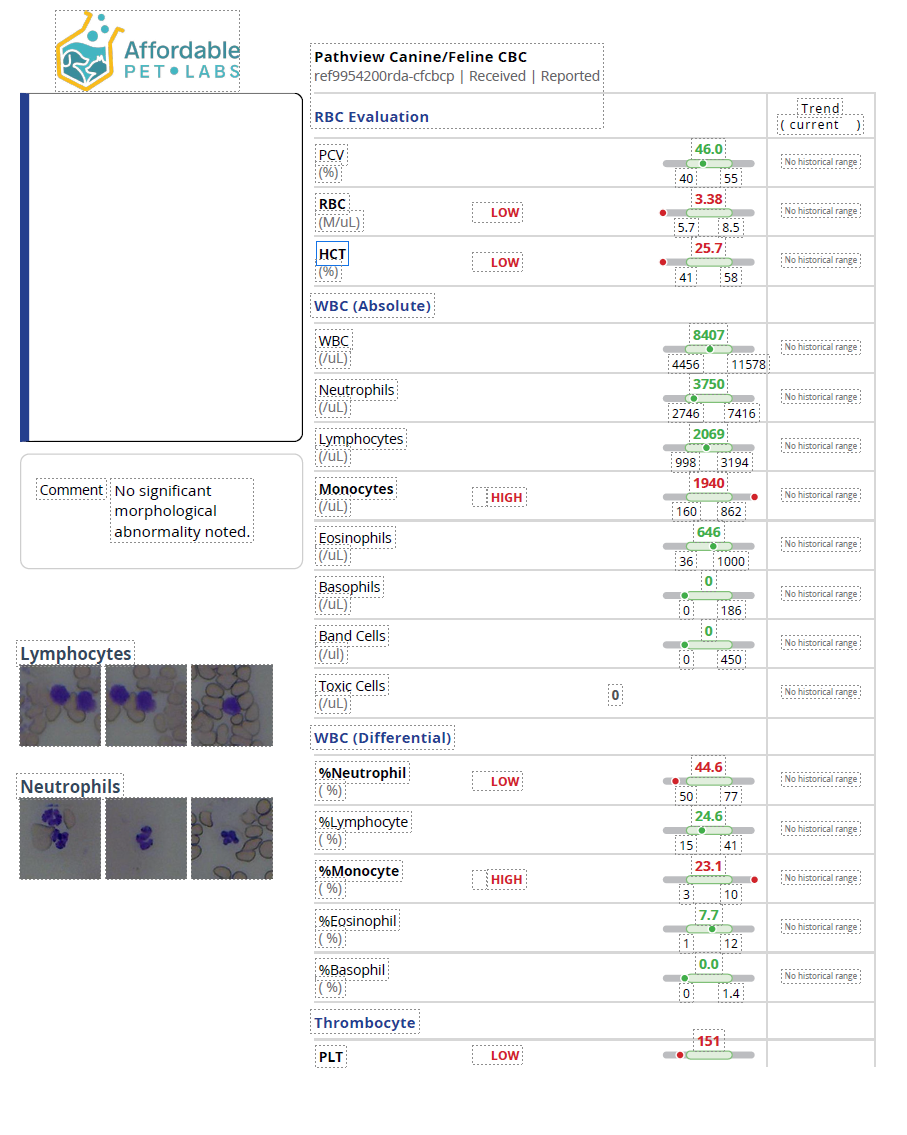
A complete blood count, or CBC, evaluates the cells circulating in your pet’s blood. It commonly includes:
-
Red blood cells: Carry oxygen to tissues
-
Hemoglobin: The oxygen-carrying protein inside red blood cells
-
Hematocrit: The percentage of blood made up of red blood cells
-
White blood cells: Help defend against infection and inflammation
-
Platelets: Help blood clot and stop bleeding
A CBC can provide clues about anemia, infection, inflammation, dehydration, immune problems, and some disorders affecting the bone marrow.
What does a chemistry panel show?
A chemistry panel measures substances related to organ function and metabolism. Depending on the panel, it may evaluate:
- Kidney markers such as blood urea nitrogen and creatinine
- Liver enzymes such as ALT and alkaline phosphatase
- Blood glucose
- Proteins
- Calcium and phosphorus
- Electrolytes such as sodium and potassium
- Pancreatic and metabolic markers
Creatinine is a waste product filtered by the kidneys. When interpreted with other values and your pet’s history, it can help your veterinarian assess kidney function. One abnormal result does not automatically establish a diagnosis, which is why lab findings should always be reviewed with a veterinarian.
How much does at-home pet blood work cost?
Affordable Pet Labs lists several in-home blood testing options in 2026. The price depends on the panel and the information your veterinarian needs.
Examples include:
Prices may change, and service availability varies by location. Always review the current product page and confirm that the panel matches your pet’s needs.
For a direct comparison, the $234.99 Total Health Assessment for dogs includes:
- Chemistry 26 panel
- Complete blood count
- T4 thyroid hormone testing
- Heartworm testing
- In-home sample collection
- Laboratory analysis
- Results generally returned within 2–3 business days
That is a bundled price. You are not adding a separate clinic examination fee, blood draw fee, or laboratory shipping charge to the listed price.

Why can at-home testing cost less than a veterinary clinic?
At-home testing may cost less because the service is structured differently.
A traditional clinic visit may include:
- Physical examination
- Veterinary consultation
- Technician time
- Blood collection
- In-house equipment or reference-lab fees
- Facility and administrative overhead
- Clinic pricing margins
- Immediate access to the veterinarian
An at-home diagnostic service may instead provide:
- A scheduled home visit
- Collection by a licensed or certified veterinary professional
- A clearly defined test panel
- Professional laboratory analysis
- Digital results for you and your veterinarian
- No waiting room or clinic visit
This does not mean that one option is automatically better. It means you should compare the same scope of service.
A $234.99 at-home wellness panel should not be compared with a $350 emergency visit that includes a physical examination, urgent treatment decisions, imaging, medication, and hospitalization support. It should be compared with the diagnostic testing portion of a routine or planned visit.
Are at-home results as accurate as veterinary clinic results?
They can be, when the same type of specimen is collected correctly and analyzed by the same licensed laboratory.
Affordable Pet Labs states that it uses the same licensed laboratories used by veterinarians. This means the laboratory analysis is not based on a consumer-grade gadget or an unvalidated home strip. Samples are collected and submitted for professional diagnostic testing.
Accuracy still depends on several factors:
- Correct patient identification
- Appropriate collection tubes
- Adequate sample volume
- Proper mixing and handling
- Timely transport
- Temperature control
- The specific test ordered
- Whether the sample is venous blood or another specimen type
At-home blood collection also does not include the full clinical context of a veterinary examination. A veterinarian can evaluate your pet’s heart, lungs, hydration, body condition, lymph nodes, abdomen, gait, and behavior during an appointment.
That is why results should be shared with your veterinarian. Laboratory numbers are most useful when combined with your pet’s age, breed, symptoms, medications, history, and physical findings.
Which option is right for your pet?
At-home blood work may be a good fit when you want to:
- Establish a wellness baseline
- Monitor a stable chronic condition
- Repeat testing recommended by your veterinarian
- Complete planned pre-anesthetic screening
- Reduce travel and waiting-room stress
- Help an anxious, elderly, or mobility-limited pet
- Obtain preventive testing at a transparent price
A traditional veterinary visit is more appropriate when your pet has:
- Trouble breathing
- Collapse or severe weakness
- Repeated vomiting or diarrhea
- Suspected toxin exposure
- Significant bleeding
- Severe pain
- A serious injury
- Sudden neurological changes
- A rapidly worsening condition
In an emergency, do not wait for an at-home appointment. Your pet may need immediate examination, stabilization, imaging, medication, or hospitalization.
How can you compare pet blood work prices fairly?
Before approving testing, ask these questions:
- Which tests are included?
- Is the CBC separate from the chemistry panel?
- Is a thyroid test included?
- Are heartworm or tick disease tests included?
- Is there a physical examination?
- Who collects the sample?
- Which laboratory analyzes it?
- Are shipping and handling included?
- How quickly will results be available?
- Will the results be sent to your veterinarian?
- Are follow-up consultations included?
Then compare panels by their actual components, not just the headline price.
Affordable Pet Labs offers in-home blood collection services in selected locations. The process includes choosing a test, confirming availability, scheduling a home visit, having a veterinary professional collect the sample, and receiving results to share with your pet’s care team.

What is the most important takeaway about dog blood test cost?
A $350 veterinary blood work bill may include several legitimate services, including the exam, CBC, chemistry testing, collection, and clinical oversight. But it is not your only option for planned diagnostic testing.
For eligible pets, an at-home panel can reduce the total price by combining the visit, collection, and laboratory testing into one transparent fee. When the sample is properly collected and analyzed by the same licensed laboratories, the laboratory results can provide comparable diagnostic value.
The goal is not simply to spend less. It is to make preventive care easier to afford and easier for your pet to tolerate. Early testing can establish a baseline, identify changes sooner, and give you and your veterinarian more information to protect the animal companion you love.
This article is for educational purposes and does not replace veterinary advice. Prices are examples based on publicly listed 2025–2026 cost data and Affordable Pet Labs pricing available at the time of writing. Confirm current prices, service availability, and the appropriate test panel with your veterinarian and Affordable Pet Labs before ordering.