If you have compared a cat blood test with routine dog bloodwork, you may have noticed that feline testing sometimes costs more. The difference is not necessarily a sign that a clinic is overcharging you.
In 2026, routine feline bloodwork commonly costs about $100–$200 for the lab panel alone, while the complete clinic visit may reach $175–$400 or more. At-home feline bloodwork can reduce the total by combining sample collection and laboratory testing into one transparent price, but it does not replace a veterinary examination when your cat is sick.
Several practical and medical factors explain the difference.
Why can a cat blood test cost more than a dog blood test?
The test names may look similar. A CBC, or complete blood count, measures red blood cells, white blood cells, and platelets in both species. A chemistry panel evaluates organs, electrolytes, proteins, and glucose in both species.
The collection process and testing economics are not identical, however.
Smaller patients require more precise sample collection
Cats generally provide a smaller blood sample than medium or large dogs. A technician must collect enough blood for every requested test while avoiding unnecessary blood loss.
This can make feline blood collection more technically demanding because:
- The veins are smaller.
- The sample volume is limited.
- Multiple tests may require different tubes.
- An inadequate sample may need to be recollected.
- Hemolysis, which means damage to red blood cells during collection, can interfere with some results.
A dog may have several convenient venipuncture options. A cat may require more careful positioning and a more deliberate collection technique.
Cats often need more careful restraint
Many cats become frightened when placed in a carrier, transported, handled by unfamiliar people, or restrained on an examination table. A nervous cat may pull away, hide, scratch, or bite.
That can mean:
- An additional veterinary technician is needed.
- The blood draw takes longer.
- A specialized handling or restraint charge is added.
- Sedation may be recommended for safety and welfare.
Sedation is not required for every cat. However, when it is needed, it can add approximately $35–$222 depending on the type of sedation and the clinic. CareCredit’s 2025–2026 veterinary cost data lists average cat sedation costs ranging from about $35 for oral sedation to $222 for deep sedation.
Feline testing often includes specialized panels
Cats have several common health concerns that may require additional testing beyond a basic CBC and chemistry panel.
Examples include:
-
T4 testing: Measures thyroxine, a thyroid hormone used to evaluate hyperthyroidism.
-
SDMA testing: Measures symmetric dimethylarginine, a kidney marker that may help identify reduced kidney function earlier than creatinine alone.
-
FeLV testing: Screens for feline leukemia virus.
-
FIV testing: Screens for feline immunodeficiency virus.
-
Fructosamine testing: Estimates average blood glucose over approximately two to three weeks.
-
Urinalysis: Evaluates urine concentration, glucose, protein, blood, and other findings that add context to bloodwork.
These tests are not always part of a routine dog panel. When they are added to a feline workup, the price naturally increases.
Feline testing has lower industry volume
Dogs receive a large share of routine veterinary testing. Feline visits and feline-specific diagnostic panels make up a smaller portion of the overall market.
Lower volume can affect:
- How frequently specialized panels are ordered.
- Laboratory pricing.
- Inventory and supply costs.
- The availability of technicians experienced with feline handling.
- The cost of maintaining feline-specific testing services.
This is an industry cost factor, not a reflection of your cat’s value or the quality of care they deserve.
What does pet blood work cost at a traditional clinic in 2026?
The total depends on your location, the clinic, your cat’s temperament, and the tests ordered. National cost data and veterinary cost guides provide useful ranges.
| Clinic charge |
Typical 2026 range |
| Routine cat exam |
$57–$130 |
| Blood draw or handling fee, if itemized |
$20–$75 |
| CBC and chemistry panel |
$100–$200 |
| Cat chemistry panel average cited by CareCredit |
$144 |
| Sedation, if required |
About $35–$222 |
| Thyroid or other specialty testing |
Often $45–$150+ |
The most important detail is that “lab markup” is not a standardized national line item. Some clinics include reference-laboratory processing, shipping, and administrative costs in the panel price. Others itemize some of those charges separately.
A typical non-emergency clinic visit may look like this:
- Exam fee: $57–$130
- Blood draw and handling: $20–$75
- CBC and chemistry panel: $100–$200
- Separately listed laboratory processing or markup: varies by clinic
- Sedation, if needed: additional charge
That creates a realistic total of approximately $177–$405 before sedation, with higher bills possible for specialized panels, emergency care, or additional diagnostics.
The CareCredit veterinary cost guide lists an average cat chemistry panel of $144 and a basic geriatric screening average of $182. PetMD reports that routine CBC and biochemistry testing for dogs and cats commonly falls between $100 and $200.

How much does at-home feline bloodwork cost?
For feline bloodwork, “at-home” usually means a licensed or certified technician visits your home to collect the sample. It does not necessarily mean that you collect the blood yourself.
Affordable Pet Labs lists these 2026 feline options:
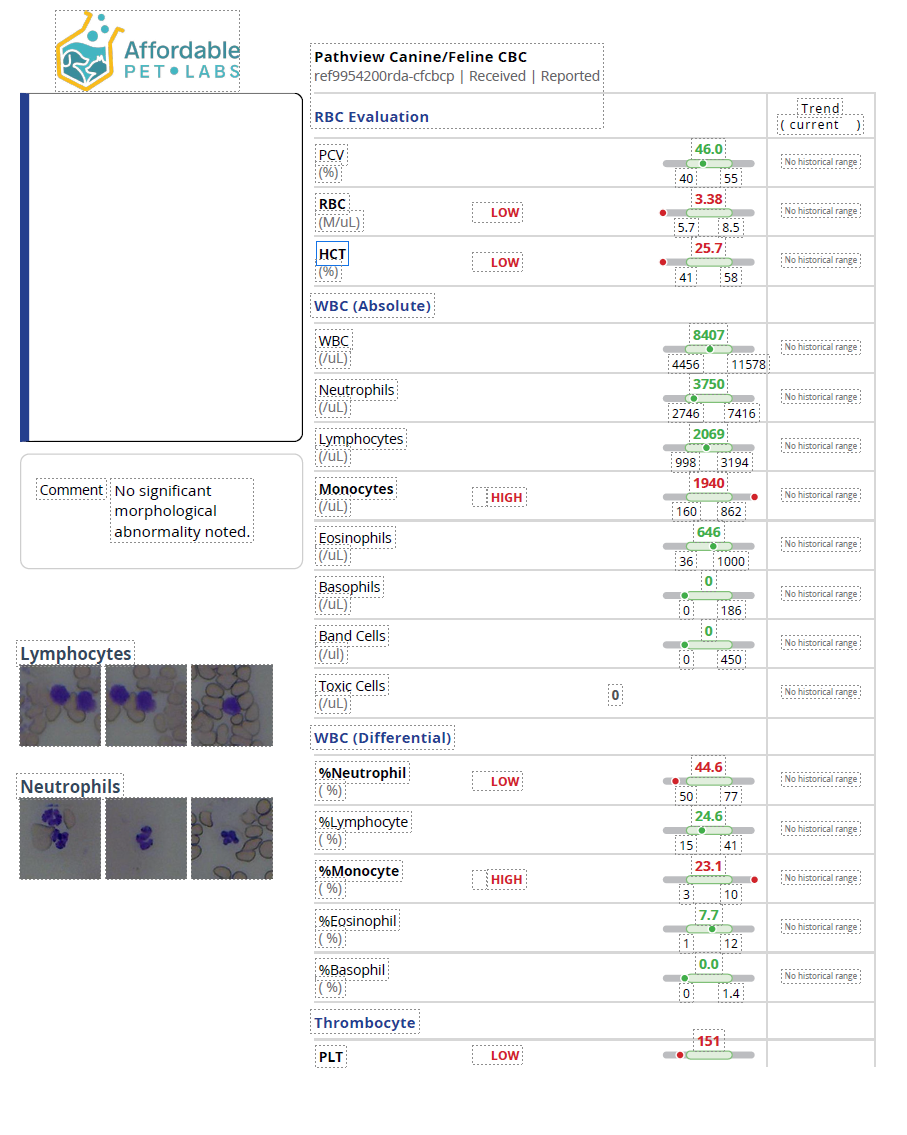
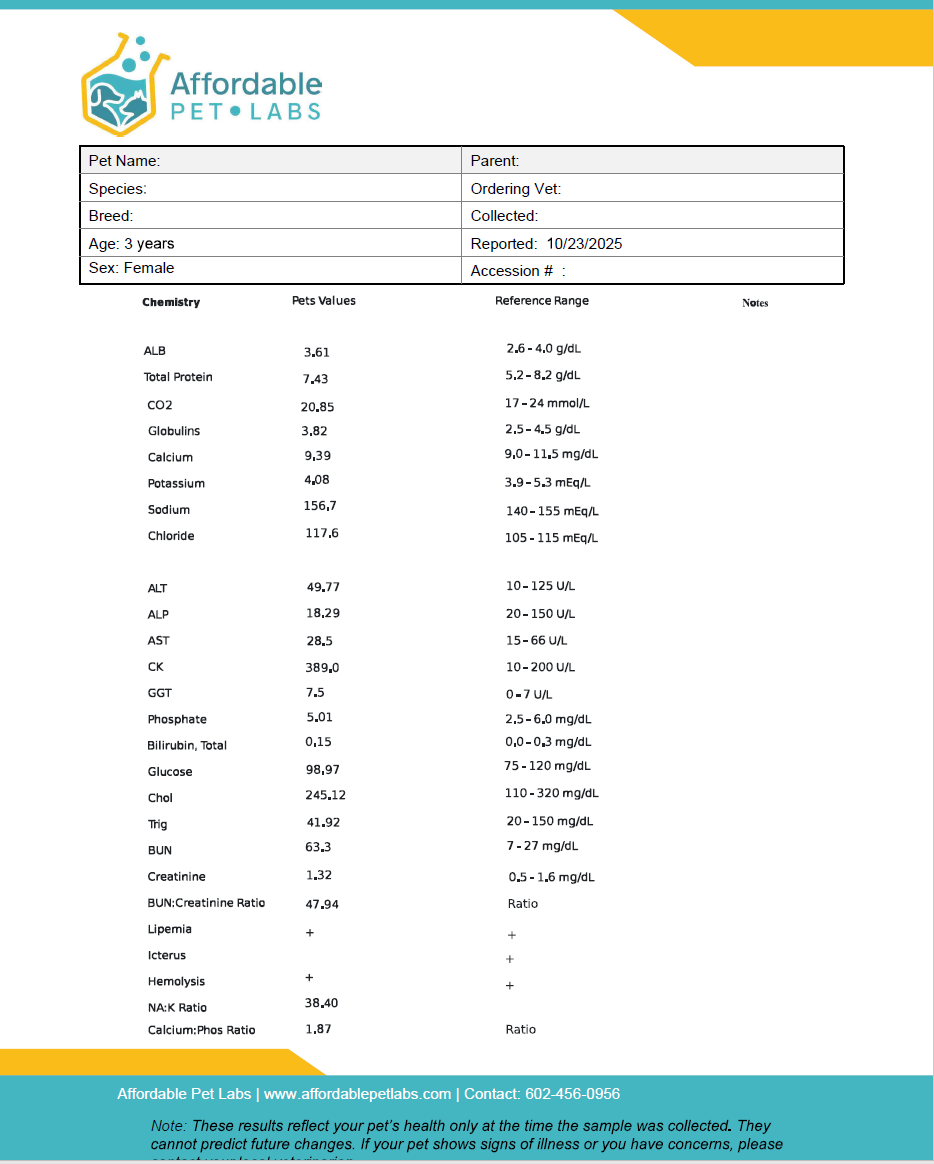
The Basic Health Assessment includes a CBC and Chemistry 16 panel. The Total Health Assessment includes more than 50 tests, including a CBC, Chemistry 27 panel, and T4 thyroid testing.
The listed home-visit price includes:
- Sample collection at home
- Technician time
- Laboratory testing included in that product
- No separate clinic exam fee
- No separate blood draw fee
- Results generally delivered within 48–72 hours or two to three business days, depending on the test
That is where the at-home option genuinely wins. You can compare the listed price with a clinic estimate without guessing whether another handling or office charge will appear later.
Is at-home feline testing always cheaper?
No. Transparent pricing does not mean every at-home test will cost less than every clinic test.
At-home testing may not be the lowest-cost option when:
- Your cat already has a scheduled veterinary examination.
- Your clinic offers a discounted wellness package.
- You need only one inexpensive test.
- Your cat requires urgent care.
- Your cat needs imaging, medication, fluids, or treatment during the same visit.
- The requested test is not included in the at-home panel.
- Home-visit services are not available in your area.
A home blood test also does not include a complete physical examination. Your veterinarian still needs to interpret the results alongside your cat’s history, appetite, weight, hydration, behavior, and physical findings.
Can a calm home sample improve the accuracy of feline bloodwork?
Yes, especially when glucose is being evaluated.
Cats are vulnerable to stress hyperglycemia. This means stress hormones can temporarily raise blood glucose during travel, restraint, and examination. Some cats may produce a clinic glucose result that looks diabetic even when their usual blood sugar is lower at home.
Stress can affect:
- Blood glucose
- Heart rate
- Respiratory rate
- White blood cell patterns
- Blood pressure
- Some hormone-related measurements
A single high glucose result does not diagnose diabetes in a cat. Your veterinarian may recommend repeat testing, urine glucose testing, or fructosamine. Fructosamine reflects average blood glucose over the previous two to three weeks, so it is less affected by one stressful appointment.
The Cornell Feline Health Center and AAHA diabetes guidelines discuss the importance of distinguishing stress hyperglycemia from persistent diabetes.
A calm home collection may therefore provide a more representative snapshot for some cats. It is not automatically more accurate in every situation, and the collection itself must still be performed correctly. But reducing travel and clinic stress can be clinically meaningful.
What should you actually test for at each age?
The right cat health test depends on age, symptoms, lifestyle, and medical history.
Kittens and young adult cats
Ask your veterinarian about:
- A baseline CBC and chemistry panel before anesthesia.
- FeLV and FIV testing when recommended.
- Testing after adoption from a shelter or multi-cat environment.
- Additional testing if appetite, growth, stool, or energy is abnormal.
Adult cats
Healthy adult cats may benefit from periodic screening based on veterinary guidance, especially if they have never had baseline bloodwork.
Testing may include:
- CBC
- Chemistry panel
- Kidney and liver values
- Blood glucose
- Electrolytes
- Urinalysis when indicated
Mature cats, around 7–10 years
As cats age, annual testing becomes increasingly useful. Your veterinarian may recommend:
- CBC and chemistry panel
- SDMA and other kidney markers
- T4 thyroid testing
- Urinalysis
- Blood pressure measurement
Senior cats, over 10 years
Many senior cats benefit from testing every six to 12 months, depending on their health.
A senior workup may include:
- CBC
- Chemistry panel
- SDMA and creatinine
- T4
- Urinalysis
- Blood pressure
- Fructosamine or additional diabetes testing when appropriate
More frequent monitoring may be appropriate for cats with kidney disease, hyperthyroidism, diabetes, weight loss, chronic vomiting, long-term medication use, or other ongoing conditions. You can also learn more in our guides to cat kidney disease symptoms and thyroid problems in cats.
How can you choose the right cat blood test for your budget?
Start by asking for an itemized estimate. Confirm whether it includes:
- The veterinary examination
- Blood collection
- Handling or restraint
- Sedation
- CBC
- Chemistry panel
- T4
- SDMA
- FeLV/FIV testing
- Laboratory processing
- Results review or follow-up
For routine screening, an at-home feline blood test can provide a convenient and transparent alternative. Affordable Pet Labs uses veterinarian-backed testing and the same type of diagnostic laboratory services used by veterinary practices.
However, lab results are not a diagnosis by themselves. Always share your cat’s results with a veterinarian, especially if any value is flagged or your cat has symptoms. Early testing gives you information. Veterinary interpretation turns that information into an appropriate care plan.