Home health testing can make pet care more convenient, especially when your dog or cat becomes anxious at the clinic. It can also provide useful information for preventive care, chronic-condition monitoring, and veterinary decision-making.
But the quality of a test depends on more than the laboratory. The sample must be collected, stored, labeled, and shipped correctly.
The most common home testing mistakes are preventable: collect the right sample at the right time, follow every instruction, and discuss borderline or abnormal results with your veterinarian.
Affordable Pet Labs helps pet parents access convenient, veterinarian-backed dog health tests, cat health tests, and broader veterinary diagnostics without adding unnecessary stress to the process.
What should you know before using a home health test?
At-home testing can involve several different types of samples and services, including:
- Fecal samples for parasite screening or gastrointestinal concerns
- Urine samples for urinalysis, urinary issues, or kidney monitoring
- Hair or saliva samples for certain screening services
- Blood collection performed during an in-home visit by a licensed technician
- Mail-in diagnostic kits processed by a professional laboratory
Each test has its own requirements. A urine sample for a complete urinalysis is not handled exactly like a fecal sample. A blood test may require preparation that a parasite test does not.
Before collecting anything, read the instructions for your specific kit. If your pet is sick, taking medication, or being monitored for a chronic condition, ask your veterinarian whether home testing is appropriate.

1. Are you collecting the sample at the wrong time?
Timing is one of the easiest details to overlook. It is also one of the most important.
A sample can change after collection. Cells may break down. Bacteria can multiply. Parasite-related findings may become harder to interpret. Exposure to heat, sunlight, or prolonged room-temperature storage can also affect sample quality.
There is no single timing rule for every dog health test or cat health test. Your kit instructions may specify:
- A fresh sample from the same day
- Collection within a certain number of hours
- First-morning urine
- Refrigeration after collection
- Shipment on a specific day of the week
- Medication timing before blood collection
How can you fix it?
- Read the collection and shipping instructions before your pet produces the sample.
- Write down the exact collection date and time.
- Plan collection around the laboratory’s shipping schedule.
- Follow storage instructions precisely.
- Contact the testing provider if the sample was delayed, overheated, frozen, or stored incorrectly.
For fecal testing, collect the sample promptly after your pet defecates. Avoid samples that have been sitting in soil, grass, or cat litter. For urine testing, use the collection method and storage instructions provided with your kit.
2. Could contamination be affecting the results?
Samples collected at home can easily pick up unwanted material. Dirt, litter, cleaning products, hair, food, water, or another pet’s waste may interfere with testing.
For example, collecting dog feces from the ground after it has been outside for an extended period may introduce environmental organisms. A cat urine sample mixed with absorbent litter may not be suitable for every type of urinalysis. A hair or saliva sample can be compromised by food or contact with human hair.
How can you prevent contamination?
- Use the container supplied with the kit whenever possible.
- Wear clean gloves during fecal collection.
- Collect feces before it contacts soil or litter.
- Use a clean, non-porous container for urine when instructed.
- Keep urine separate from feces.
- Do not combine samples from multiple pets.
- Keep collection materials away from household cleaners and food.
If contamination occurs, do not try to “clean up” the sample or transfer it repeatedly. Ask whether a new collection is needed.
3. Are you skipping the instructions or pre-test preparation?
Home kits are designed to be straightforward, but “simple” does not mean every step is optional.
Some tests require a particular amount of sample. Others require specific swabs, tubes, preservatives, or collection techniques. Blood testing may involve fasting, water access, activity restrictions, stress reduction, or medication timing.
Preparation is especially important for specialized testing. Some medications can affect hormone, glucose, drug-monitoring, or other laboratory results. However, you should never stop or change a medication unless your veterinarian gives you specific instructions.
Before testing, confirm:
- Whether your pet should fast
- Whether water should remain available
- Whether exercise should be limited
- Whether medication should be given at a certain time
- Which sample type is required
- How much sample is needed
- Whether the sample should be refrigerated or kept at room temperature
- When and how it must be shipped
Veterinary guidance from VCA Hospitals explains that proper blood-test preparation can reduce unreliable results and repeat testing. The right preparation depends on the individual test.
4. Are you using the wrong container or collecting too little?
A household jar, plastic bag, paper towel, or reused container may not be an acceptable substitute for a proper specimen container.
The wrong container can introduce residue or chemicals. An insufficient sample may reduce the laboratory’s ability to perform the requested analysis. Some tests also require a preservative, while others must be collected in a plain container without additives.
For fecal tests, collect the amount requested by the kit. More is not always better, but too little may not be enough for a complete analysis.
For urine testing, use the supplied container or a clean container specifically approved by the test provider. Do not assume that any tube or bottle is suitable.
IDEXX’s specimen collection guidelines explain how container type, sample volume, storage, and handling can affect laboratory results.
5. Are you forgetting to label, store, or ship the sample correctly?
A well-collected sample can still become unusable if it is mislabeled or packaged incorrectly.
Before sealing the package, check that:
- Your pet’s name is clearly written where requested.
- The collection date and time are recorded.
- The sample type is identified.
- The requisition form is complete.
- The container is tightly closed.
- The sample is placed in the correct specimen bag.
- Cold packs, if supplied, are used as directed.
- The return label is attached correctly.
- The package will not sit in extreme heat or cold.
If you have more than one pet, complete one kit at a time. Keep each pet’s sample and paperwork together. Never guess which sample belongs to which animal.

6. Are you treating a borderline result as either “nothing” or a diagnosis?
A borderline result can be confusing. It may indicate an early change, normal biological variation, a temporary condition, a collection issue, or a result that needs confirmation.
A single number or screening result rarely tells the entire story. Your veterinarian may need to consider:
- Your pet’s age and breed
- Current symptoms
- Physical examination findings
- Medications and supplements
- Recent illness or stress
- Previous laboratory results
- The quality and timing of the sample
- Whether additional testing is needed
Do not ignore a slightly abnormal result because your pet seems fine. Pets often hide early signs of disease. At the same time, do not panic or change your pet’s diet or medication based on one result without veterinary advice.
The best response is to share the complete report with your veterinarian and provide the collection details. A trend across multiple results can be more useful than one isolated value.
7. Are you skipping follow-up after the test?
Testing is not the final step. It is part of a larger care plan.
Follow-up matters when:
- The result is positive
- The result is borderline
- Your pet’s symptoms continue
- The sample was difficult to collect
- The test was performed while your pet was taking medication
- A condition is being monitored over time
- Your veterinarian recommended a repeat test
- Your pet’s behavior, appetite, thirst, urination, stool, or energy changes
Home testing should support veterinary care, not replace regular examinations. Some results may require an in-person exam, imaging, a culture, repeat laboratory work, or treatment.
Seek prompt veterinary care if your pet has trouble breathing, collapses, has repeated vomiting, cannot urinate, experiences a seizure, has pale gums, or appears severely painful. Do not delay urgent care while waiting for a home test.
How can you make your next home test more reliable?
Use this simple checklist:
- Choose the test that matches your pet’s concern.
- Ask your veterinarian whether testing is appropriate.
- Read all instructions before collecting the sample.
- Prepare the supplies in advance.
- Record the collection date and time.
- Prevent contact with soil, litter, feces, food, and cleaners.
- Use the correct amount and container.
- Store and ship the sample exactly as directed.
- Keep records of symptoms, medications, and previous results.
- Follow up on positive, borderline, or persistent concerns.
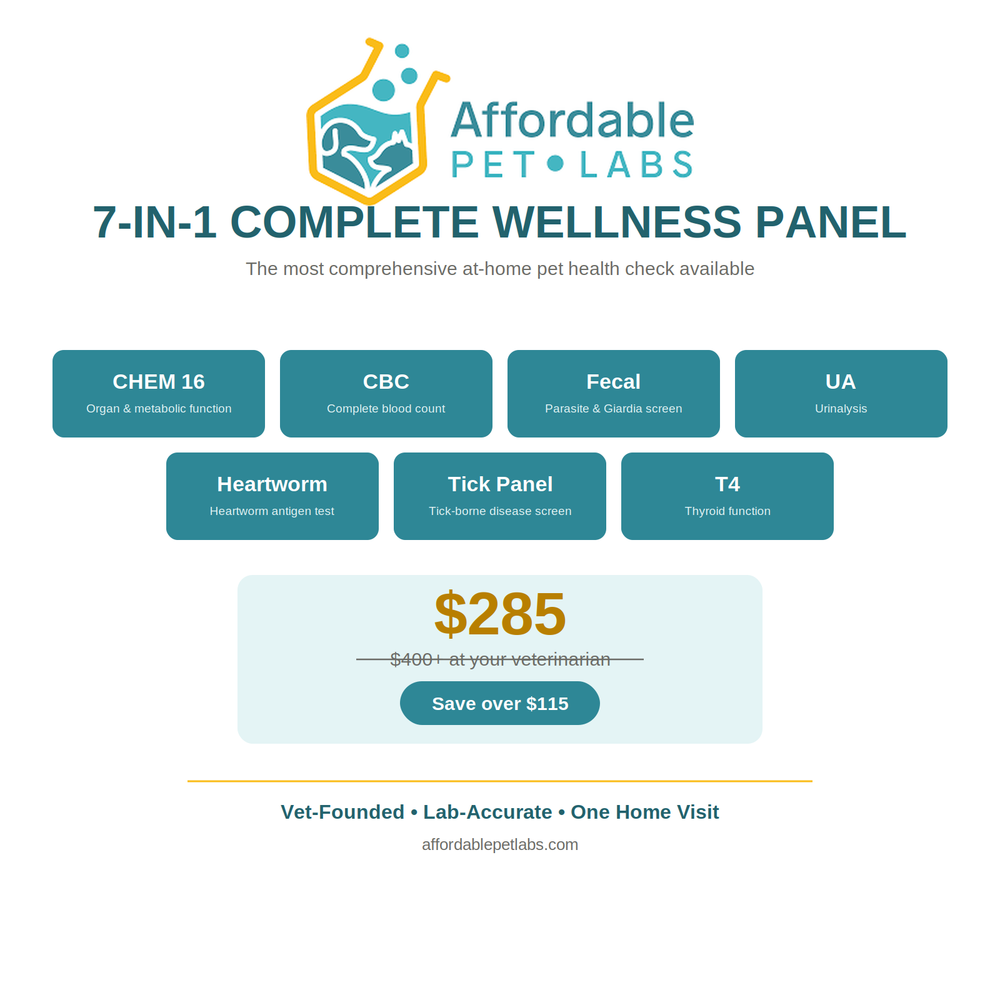
Affordable Pet Labs offers easy home collection kits for dogs and cats, as well as in-home diagnostic testing performed by licensed technicians. Options include fecal testing, urinalysis, bloodwork, wellness panels, kidney testing, tick disease testing, and other veterinarian-backed diagnostics.
What is the most important takeaway for pet parents?
At-home testing can be a practical, low-stress way to gather meaningful health information about your animal companion. The most reliable results begin with careful collection and end with appropriate veterinary follow-up.
When you use a home health test, slow down for the details. Correct timing, clean collection, proper storage, and thoughtful interpretation can help turn a convenient test into useful information for your pet’s care.
For questions about available testing options, visit Affordable Pet Labs or explore diagnostic services for dogs and cats.